


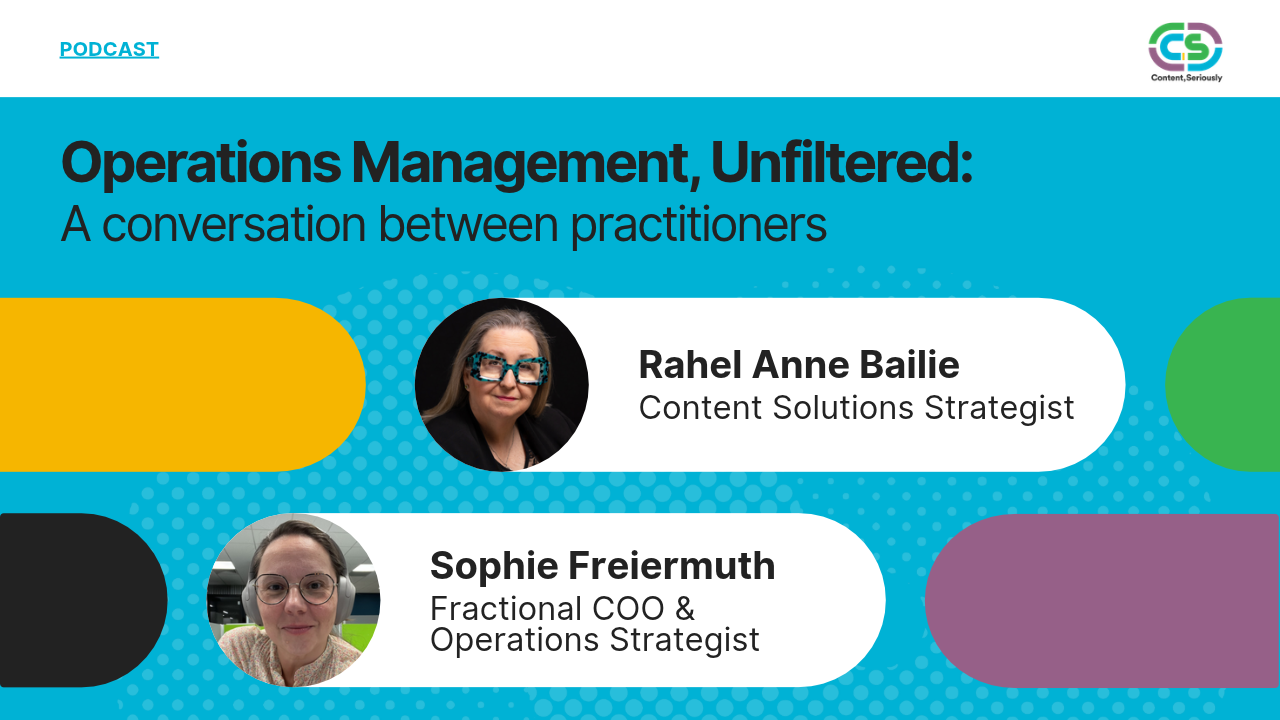
Unfiltered is a series of frank conversations between practitioners about industry experiences and lessons learned.
In episode 2, Rahel talks with Sophie Freiermuth, a fractional COO and operations strategist. Rahel met Sophie when she was a UX designer, and she has since moved into operations management “with a lot of incremental pivots in between.” Sophie helps run operations at Marrakech Insiders, which runs sidecar tours and experiences around Marrakech. When Morocco changed its clocks in September, she ended up telling her team to set their phones to Reykjavik.
When a country changes its clocks. Morocco moved permanently to UTC on 20 September, with three months’ notice, and IANA (the body that maintains the world’s time zone data) published the update within two weeks. Sophie warned the business’s ticketing provider days ahead. It didn’t patch in time, and “chaos ensued.”
Three points of failure. The ticketing data was wrong, some phone operators hadn’t deployed the update, and older phones couldn’t install it. “Three possible points of failure all failed.” Her stopgap was to set phones to Reykjavik, which has always been on UTC.
9 a.m. is 9 a.m. The ticketing provider was converting customers’ local booking times into UTC and then applying corrections, rather than keeping the time the customer chose. Sophie’s rule: store local time and location as the truth, and calculate everything else from them. Her question for the vendor: “do you even understand your core business?”
Clean data won’t save you from bad calculations. Rahel points out that much of what gets called AI hallucination is really bad data or content hygiene. If a system keeps recalculating in the background, though, “Data hygiene isn’t going to do squat.”
Believe your users. Sophie lives in Spain and runs into forms that refuse a foreign postcode. She argues for checking with users instead of overwriting what they enter: “keep the data sacred,” and make it clear whenever data has been cleaned or derived.
Content belongs with product. Content teams should sit with product, where they can shape how data and content are generated, transformed and distributed. In Sophie’s view, content “definitely never belongs to marketing.”
Operations as design by other means. Sophie’s move into operations was accidental. She brings systems thinking, service design and an understanding of data flows to a fast-growing business, and compares the work to “reclaiming your grandmother’s garden” from brambles and nettles.
Listen to the full episode on YouTube: